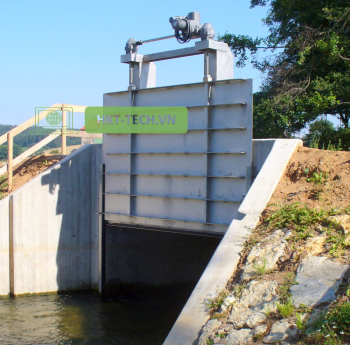
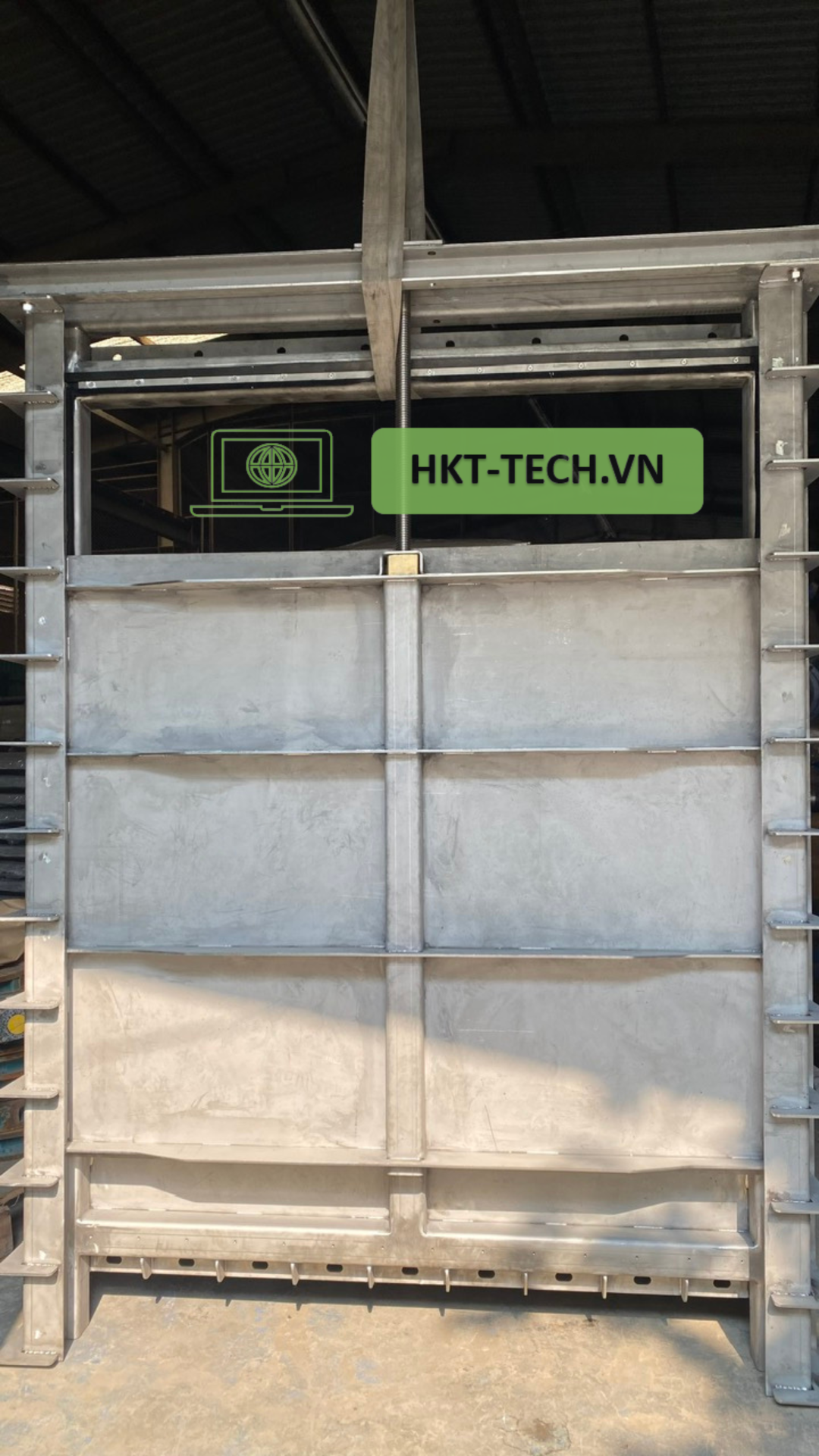
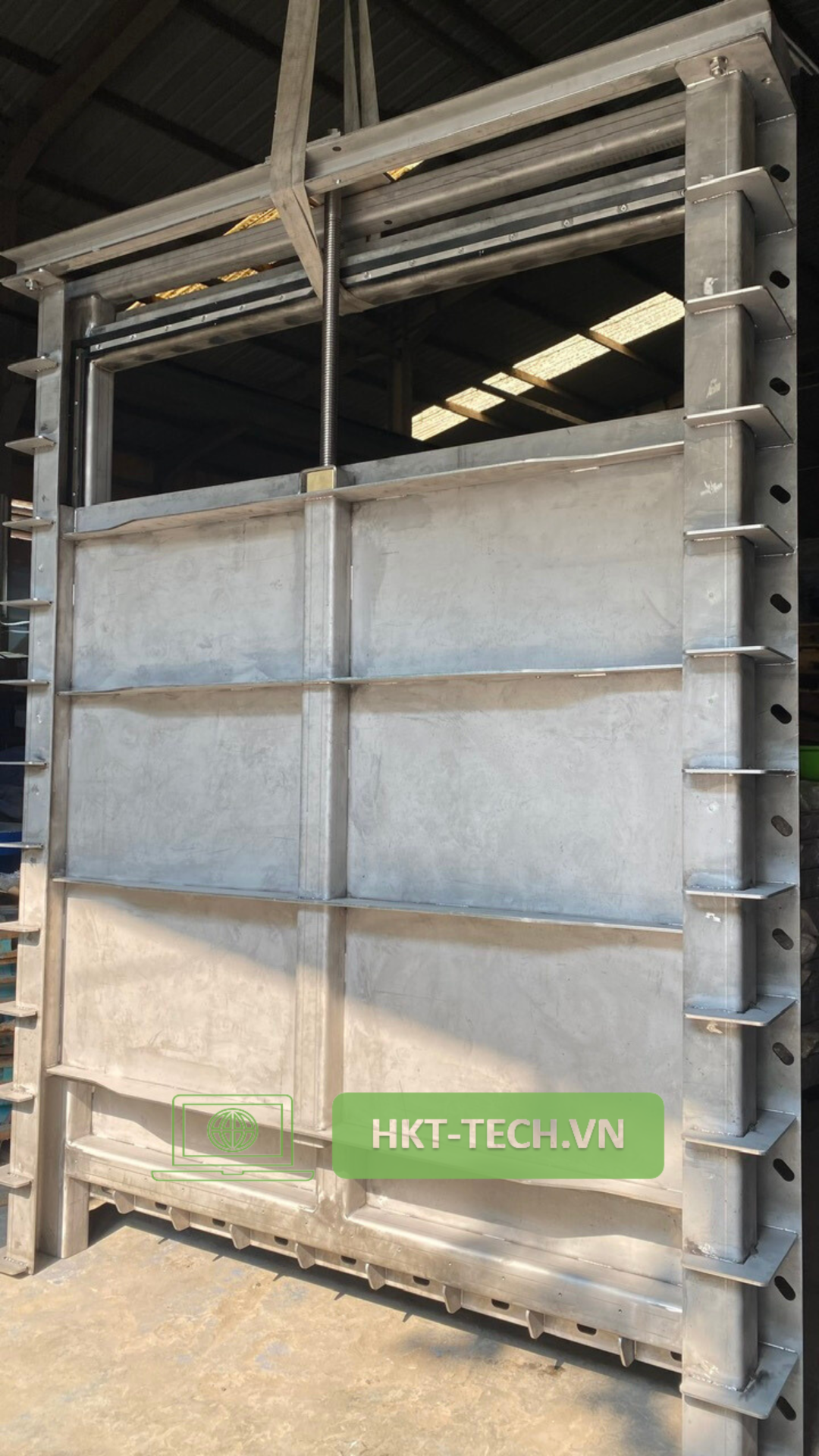
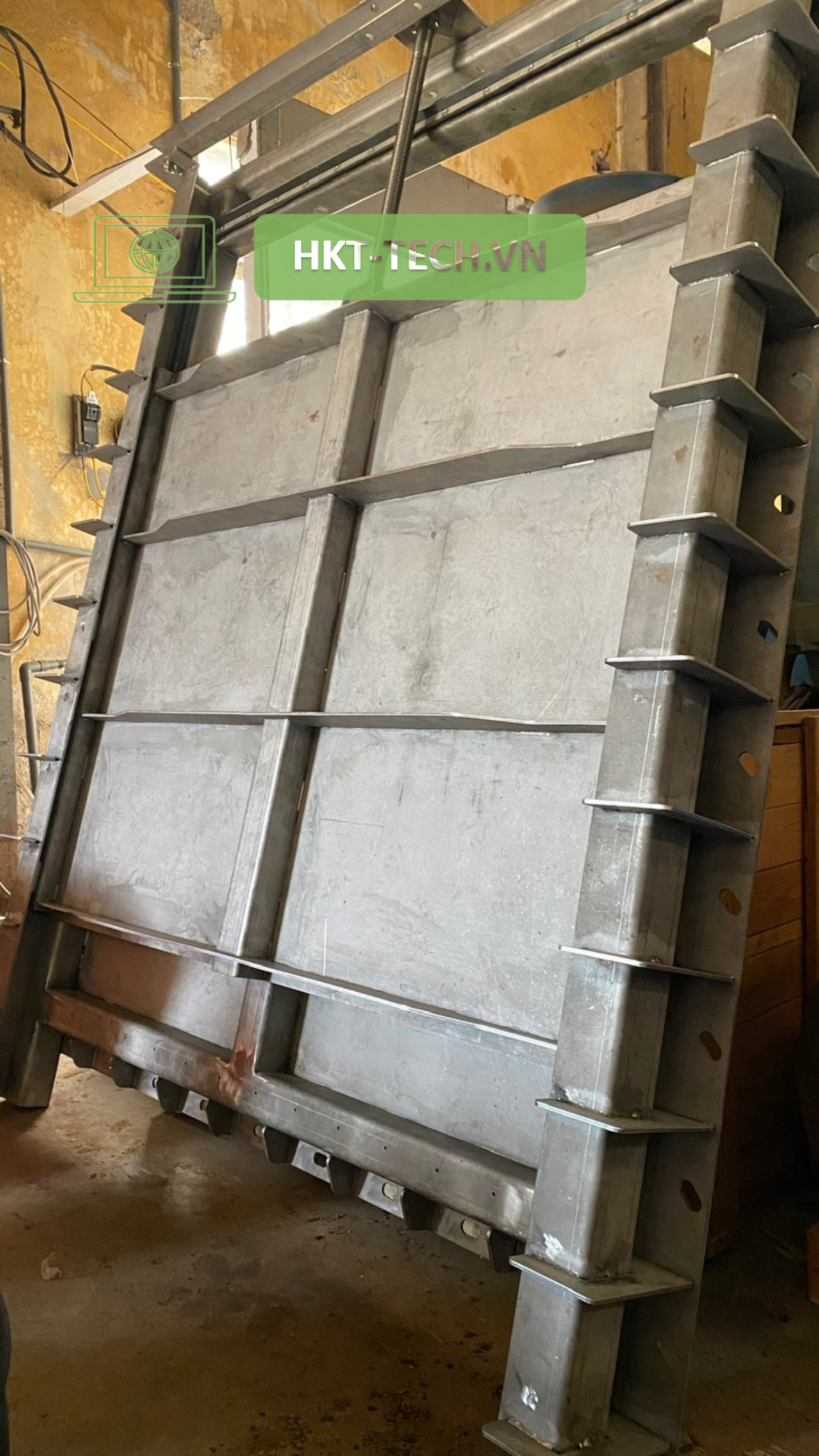



1. What is a Penstock?
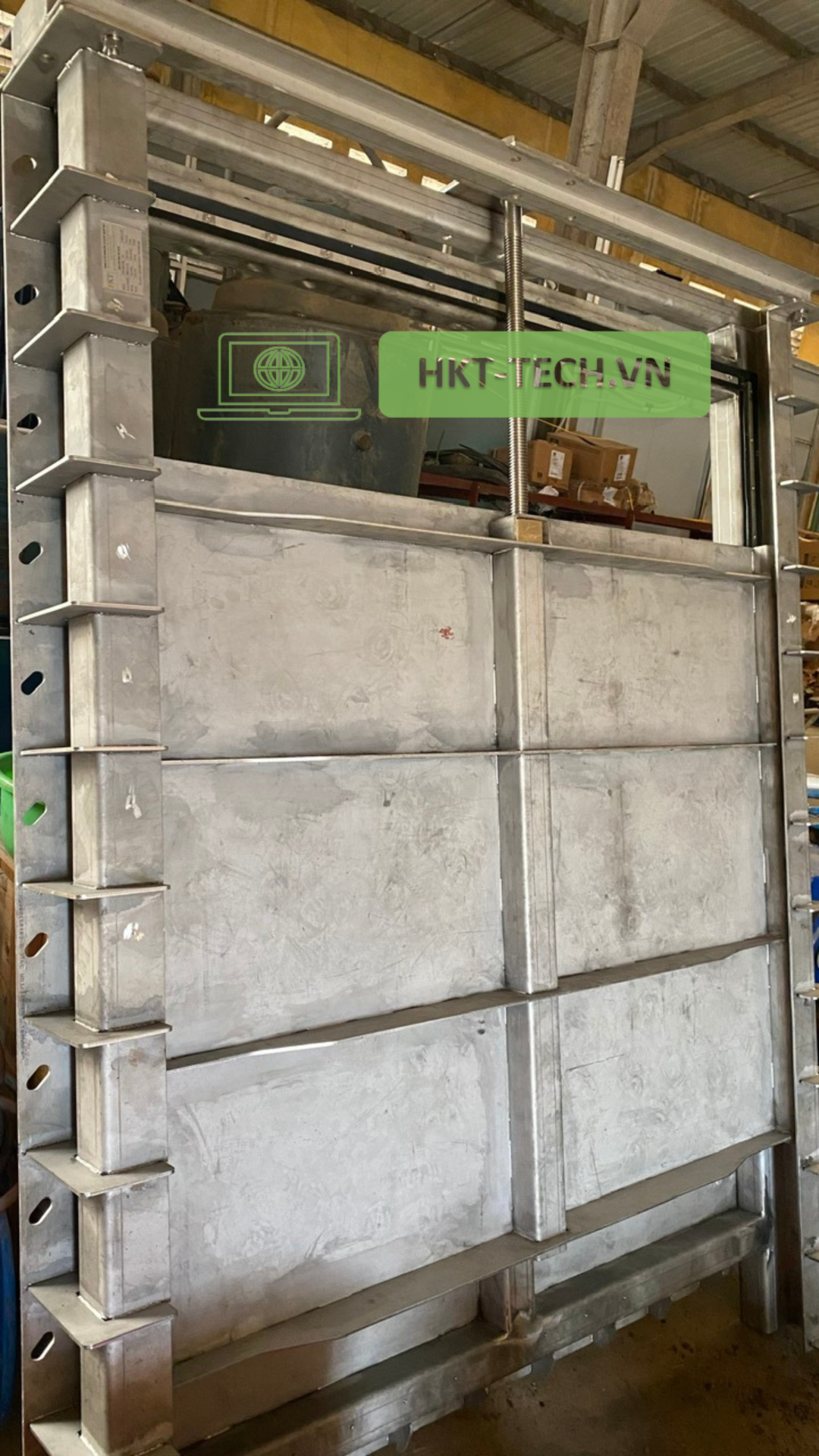
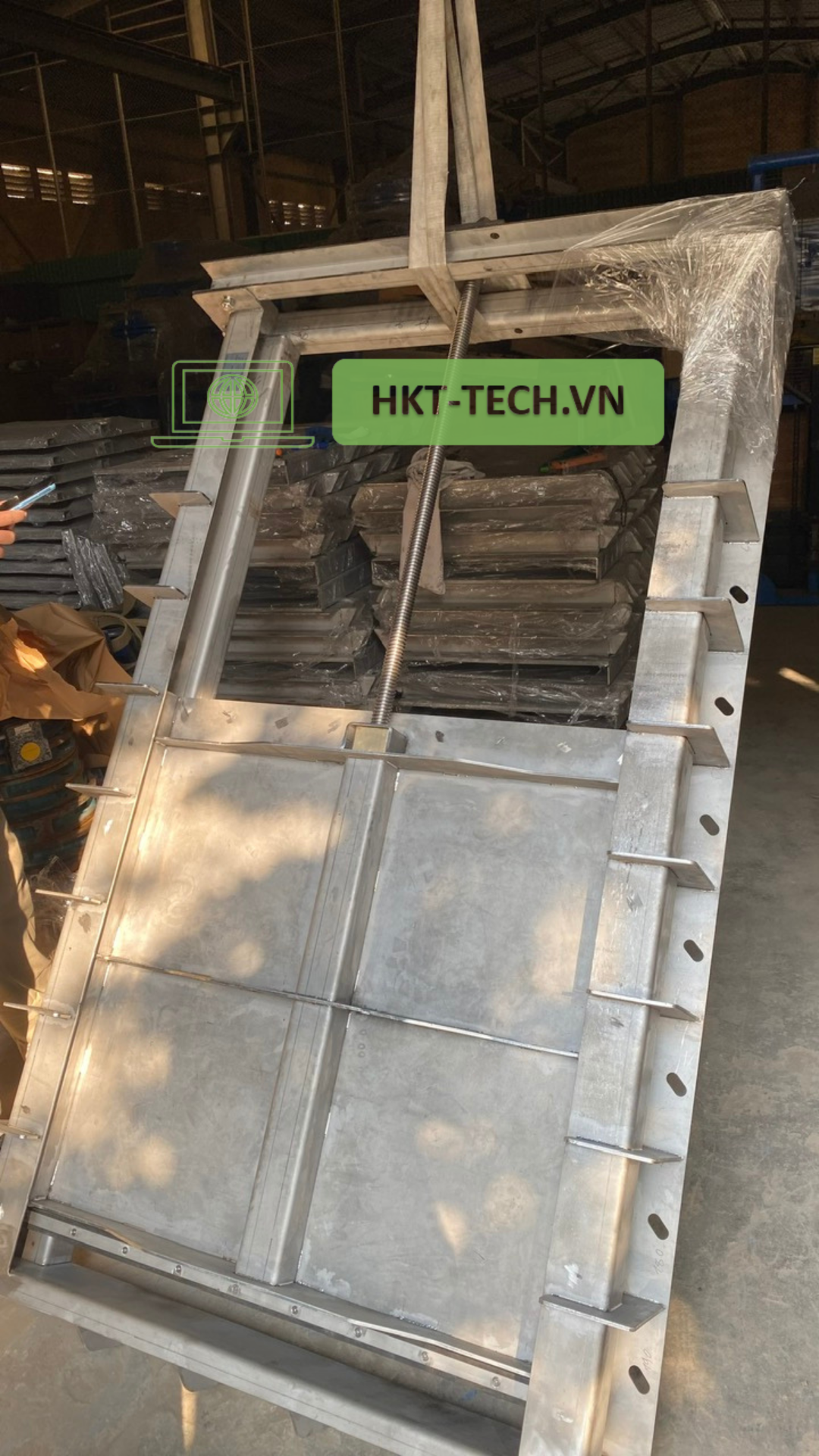
Penstock (also known as a gate valve, gate valve fade) is a device that regulates flow in water supply and drainage systems, irrigation, wastewater treatment, and canals. It's operates on the principle of raising and lowering the baffle (valve gate) to control or stop the flow.
Small Penstock are commonly used in urban drainage systems, box culverts, small pumping stations, and water treatment plants with their lightweight, flexible, and easy-to-install design.
2. Structure of Small Penstock
- Valve type: Penstock 4-sided sealed sluice gate valve (sealed on the hole face on the wall: top, bottom, left, right); Penstock 3-sided sealed sluice gate valve (mounted on ditch, spillway: left, right, bottom); Overflow Penstock (Designed for the purpose of regulating water flow: When the water level reaches the threshold, it will automatically overflow and keep the water level fixed).
- Valve frame (Frame) – Made of stainless steel (Inox 304/316), cast iron, Epoxy coated SS400/ Galvanized steel or composite plastic.
- Gate – Water regulating shield, can be made of steel, cast iron or HDPE plastic.
- Valve bore width: W= 200 mm to 2500 mm.
- Valve height: H= 200 mm to 2500 mm.
- Spindle/Rod – Drives the valve door up/down, usually made of stainless steel/bronze.
- Sealing Gasket – EPDM or NBR rubber ensures watertightness and prevents leakage.
- Operating system – Can be controlled by handwheel, steering wheel, or electric actuator.
- Accessories provided: Including accessories such as bolts, expansion joints, specialized for installation.
- Applicable standards: TCVN 8298:2009/ Din/ AWWA
3. Operating Principle
- Open valve: Turn the handwheel or operate the motor to raise the valve gate, allowing water to flow through.
- Close valve: Lower the valve gate to block the flow of water or regulate the flow through.
- Flow regulation: Adjust the opening of the valve to control the water level.
4. Applications of Small Penstock
- Urban drainage system – Installation in box culverts, small canal systems.
- Saltwater barrier - Installed at sluice gates / sea gates to prevent tidal currents.
- Wastewater treatment plant – Flow control in settling tanks, treatment tanks.
- Irrigation & Agricultural Canals – Regulating irrigation water flow.
- Pumping station system – Protects pumps and regulates water flow.
- Industrial applications – Used in food, pharmaceutical, and chemical plants.
5. Advantages of Small Penstock
- Compact, easy to install – Simple design, does not take up much space.
- Flexible operation – Can be controlled by hand crank or electricity.
- Watertight, leakproof – Use EPDM or NBR gasket to ensure tightness.
- Durable, corrosion resistant – Material: Stainless steel 304/316, cast iron, SS400 coated with Epoxy or composite suitable for water and mild chemical environments.
- Simple maintenance – No regular maintenance required.
6. Choose the Right Small Penstock
- Installation size – Select by pipe/drain diameter or discharge channel width.
- Material – Stainless steel for highly corrosive environments, cast iron for clean water systems, HDPE plastic for light applications.
- Operating mechanism – Manual, electric, or pneumatic control depending on requirements.
- Usage environment – Waste water, clean water, salt water, or chemicals.
Conclusion: Miniature sluice gates are an effective solution for regulating flow in wastewater, irrigation, and industrial systems. With their compact, durable, and easy-to-operate design, these valves are suitable for urban drainage works, pumping stations, and water treatment plants.